The best entrance for Louvre visitors isn’t always the one every photo points you toward. The glass pyramid doors are iconic, but they’re also usually the slowest way in. Here’s what I’d actually do: pick your entrance based on your ticket type and the time of day, not on which door looks most famous in photos.
Why Does This Even Matter for Your Visit?
Because the entrance you choose can swallow anywhere from five to forty-five minutes of your day before you’ve seen a single painting, and that’s time you can’t get back once your ticket’s time slot has started counting down. I’ve seen travelers lose nearly an hour standing at the pyramid when a five-minute walk to a side door would have gotten them in almost immediately.
I’d treat picking the right entrance as part of planning the visit itself, not an afterthought you figure out once you’re standing in the courtyard. A few minutes of reading this now saves real time on the day.
Why Shouldn’t You Just Use the Pyramid Entrance?
You can, and plenty of visitors do, but it’s typically the entrance with the longest security line, since it’s the one every tour bus and walk-up visitor defaults to without thinking twice. On a busy mid-morning in peak season, that line alone can eat 30 minutes or more before you’ve even reached the ticket check.
I’d only choose the pyramid entrance deliberately if the arrival experience itself is part of why you’re visiting, the sweep down into the glass-lit lobby is genuinely a nice moment. For everyone else, I’d treat it as the entrance to avoid rather than default to.
If you’re curious about the pyramid’s own history beyond just using it as a door, my who designed the Louvre pyramid guide is worth a read, purely as context for why this particular entrance became the famous one despite rarely being the fastest.
What Is the Carrousel du Louvre Entrance?
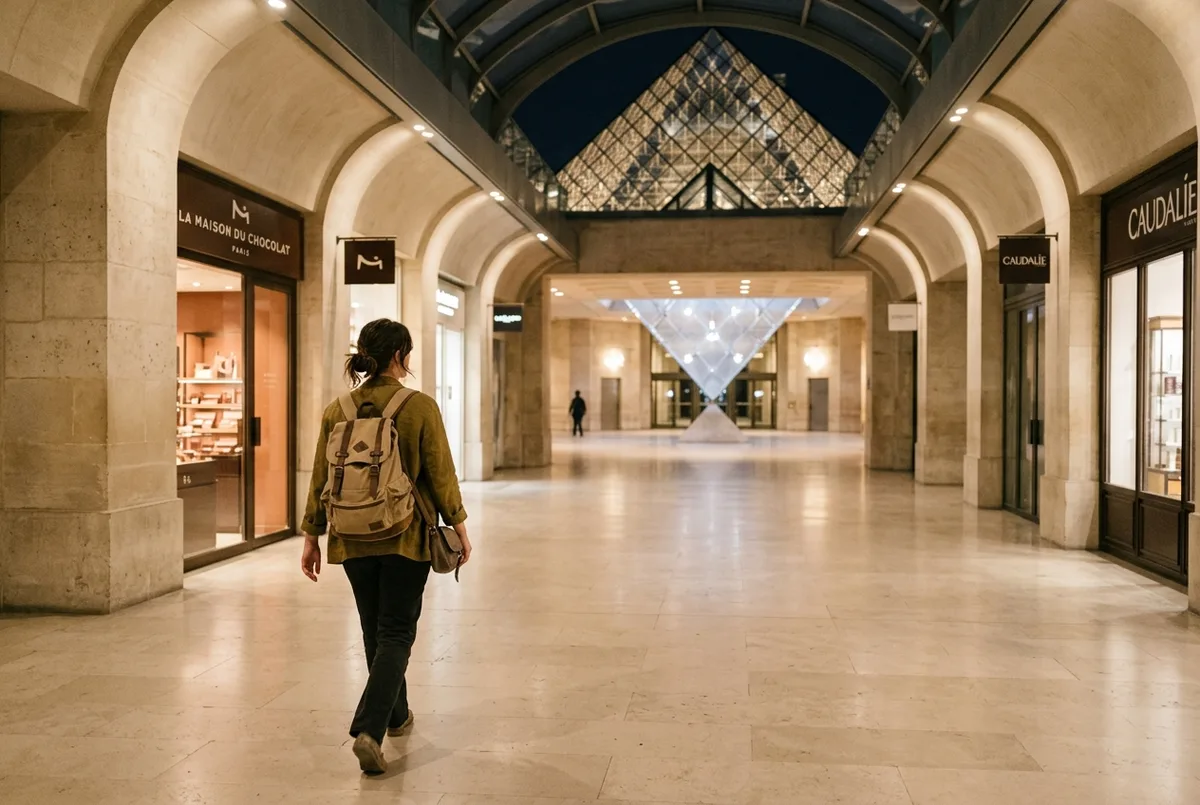
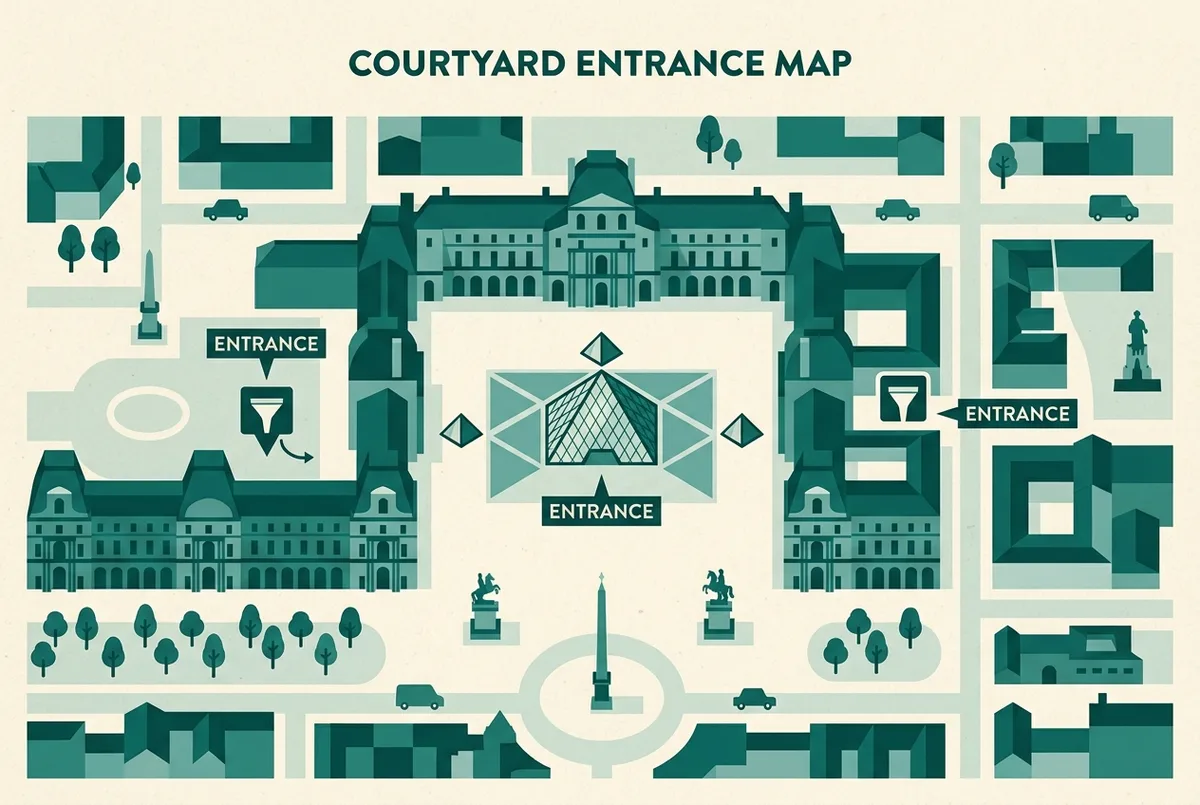
It’s an underground entrance reached through the Carrousel du Louvre shopping arcade, accessible via 99 Rue de Rivoli or directly from the Palais Royal-Musee du Louvre metro station without ever stepping into the main courtyard. It funnels into the same Hall Napoleon lobby as the pyramid, just from a different, usually quieter, direction.
This is the entrance to the Louvre I’d point most independent travelers toward by default. You get the same access to every wing, the same ticket check, and in my experience a noticeably shorter wait, especially on weekday mornings. It also keeps you out of the weather on a rainy Paris day, which the pyramid’s outdoor queue does not.
What Is the Passage Richelieu Entrance?
It’s a side entrance along Rue de Rivoli reserved specifically for visitors with advance reserved-entry or guided tickets, rather than open to anyone buying on the spot. Because it’s restricted to pre-booked ticket holders, it tends to move faster than either of the two general-access entrances during peak hours.
I’d push this one hard for anyone who’s already booked a guided or skip-the-line product, since it’s often the fastest route in of the three by a meaningful margin. If your booking confirmation specifically names the Passage Richelieu, use it; don’t default back to the pyramid out of habit.
Which Entrance Should You Use With a Standard Ticket?
I’d default to the Carrousel du Louvre entrance for a standard, non-guided ticket nearly every time. It reaches the exact same lobby and collection access as the pyramid, usually with a shorter wait, and it’s a genuinely pleasant indoor walk through the shopping arcade rather than standing exposed in the courtyard.
The one exception is if you specifically want the pyramid photo moment on your way in rather than after. In that case, I’d still photograph the pyramid from outside first, then double back to the Carrousel entrance to actually go through security.
Which Entrance Should You Use With a Guided or Skip-the-Line Ticket?
Check your booking confirmation first; a genuine skip-the-line or guided product will usually specify the Passage Richelieu entrance precisely because that’s the point of paying for one. I’d trust the confirmation over any general advice here, since providers do occasionally route groups through other points depending on the day.
If your confirmation doesn’t specify, I’d ask your guide or the provider directly rather than guess, since a reserved-entry product only saves you time if you actually use the entrance it was designed around.
Is One Entrance Better for Visitors With Mobility Needs?
The Carrousel du Louvre entrance tends to be the more step-free option of the three, since it’s designed as part of a modern underground shopping concourse rather than retrofitted into a historic courtyard approach. I’d still confirm current accessibility routing on the official Louvre visitor site ahead of a trip if step-free access is essential, since specific routing can shift with ongoing renovation work.
I’d also flag this to anyone traveling with a stroller or a visitor who tires easily on their feet: the shorter Carrousel route means less standing before you’ve even started your visit, which matters more than people expect over a multi-hour museum day.
Does the Entrance You Use Change How Long Security Takes?
Indirectly, yes, since security screening happens at each entrance’s own checkpoint rather than at one shared point, so a shorter line at one door generally means a shorter wait overall. The screening process itself, bag checks and a walk-through scanner, is roughly the same regardless of which door you pick.
I’d plan around the queue length, not the screening speed, since that’s genuinely where the time difference between entrances comes from. A quiet entrance with the same screening process beats a busy one with identical security every time.
Can You Switch Entrances If One Line Looks Too Long?
Generally yes, especially between the pyramid and Carrousel entrances, since both serve general-admission ticket holders and lead to the same lobby. If you arrive and see the pyramid queue stretching further than you’d like, walking the few minutes over to the Carrousel du Louvre entrance is almost always worth it.
I’d make this call early rather than waiting it out, since standing in a slow line for ten minutes before deciding to switch just adds that time on top of the walk. If you can see the queue from a distance, decide before you join it.
My Honest Recommendation
I’d skip the pyramid doors as a default and use the Carrousel du Louvre entrance for any standard ticket, reserving the pyramid purely for the photo op before or after your visit. If you’ve booked a guided or skip-the-line product, follow your confirmation to the Passage Richelieu entrance without second-guessing it; that routing exists specifically to save you time.
For more on the pyramid itself and why it became the entrance everyone defaults to despite rarely being the fastest option, my glass pyramid guide covers the landmark’s full history, and if getting across the city to whichever entrance you choose is still an open question, my how to get to the Louvre guide lines up the metro stops and bus routes that land closest to each one.
Once your entrance plan is set, my louvre museum tickets homepage has every current tour and ticket format if you’re still deciding which one to book.
Frequently Asked Questions
What is the best entrance for the Louvre to avoid lines?
The underground Carrousel du Louvre entrance generally has shorter waits than the main glass pyramid doors for standard tickets.
Is the Passage Richelieu entrance open to everyone?
No, it’s typically reserved for visitors with pre-booked reserved-entry or guided tickets, not general walk-up admission.
Do all Louvre entrances lead to the same place inside?
Yes, all three connect to the same Hall Napoleon lobby, from which you can reach every wing of the museum.
Can you enter the Louvre without going through the pyramid?
Yes, both the Carrousel du Louvre and Passage Richelieu entrances bypass the pyramid courtyard entirely.
Which entrance is closest to the metro?
The Carrousel du Louvre entrance connects almost directly to the Palais Royal-Musee du Louvre metro station.