Who Designed the Louvre Pyramid? The Architect and the Story
See prices From 59 EUR · Free cancellation available
Contents
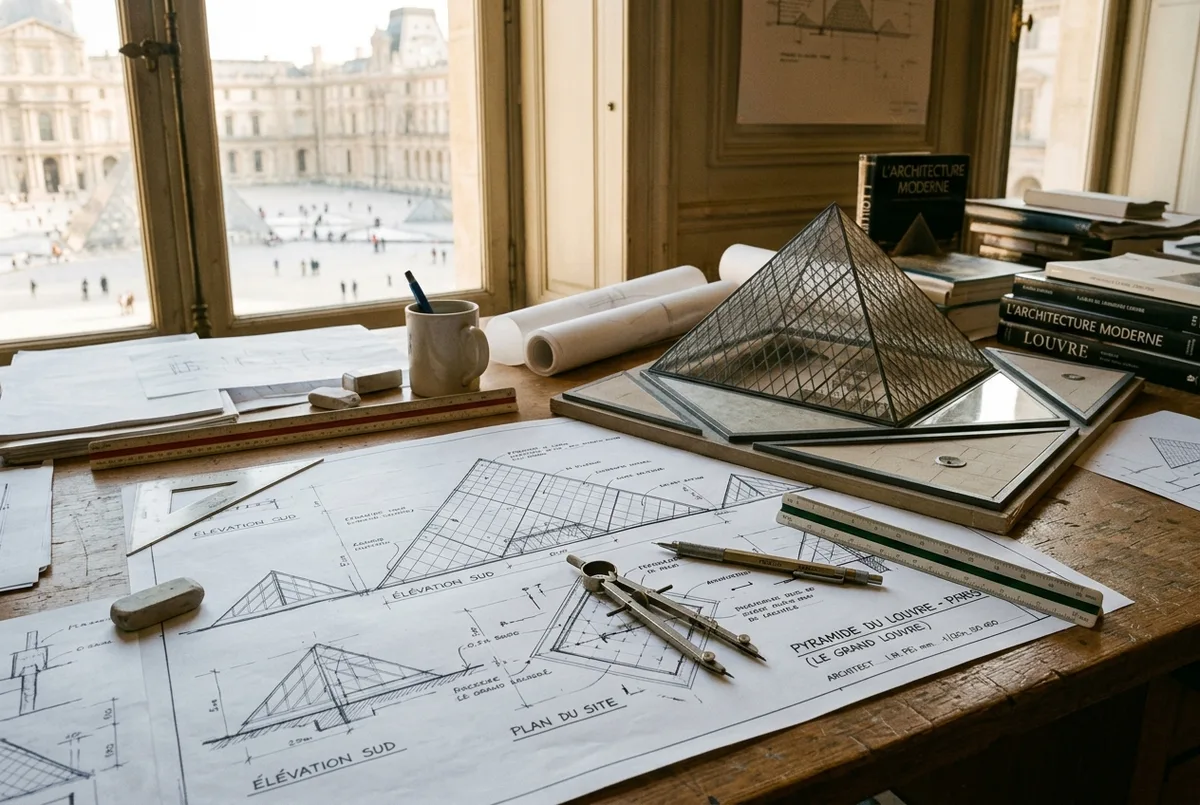
Who designed the Louvre pyramid? I.M. Pei, a Chinese American architect already well known for bold modern civic buildings, won the commission in the early 1980s and saw it through to its 1989 unveiling. I’d call it one of the most consequential design decisions in modern museum history, and a genuine risk that could easily have gone the other way.
Who Was I.M. Pei?
Ieoh Ming Pei was a China-born, American-trained architect whose career already included major museum and civic projects before the Louvre commission came along. By the time French President Francois Mitterrand selected him for the job, Pei had built a reputation for clean geometric forms that still managed to feel monumental.
I’d push back on the idea that Pei was some outsider gambling on an unfamiliar building type. He had a track record with serious institutional architecture already, which is part of why Mitterrand’s team trusted him with arguably the most scrutinized commission in France at the time.
Check prices & dates
Ready to visit?
Book your tickets in advance: popular time slots sell out.
Mitterrand wanted a decisive, modern solution to the Louvre’s entrance and circulation problems as part of his larger Grand Louvre renovation plan, and he reportedly handpicked Pei directly rather than running an open competition, which was itself unusual and controversial at the time. The president saw Pei’s clean, geometric style as the right fit for solving a practical problem without pretending to imitate the historic palace around it.
My honest take on this: a competition probably would have produced something safer and more derivative. Going directly to an architect with a strong, confident point of view is exactly why the final structure reads as a single clear idea rather than a committee’s compromise.
Why Did Pei Choose a Pyramid Shape Specifically?
A pyramid is one of the few geometric forms that reads as a single, unmistakable entrance from any angle around a large courtyard, and its sloped glass faces let daylight reach the underground lobby below without a bulky, opaque roof. Pei reportedly also saw the shape as a deliberate contrast: a simple, almost ancient geometric form set against the ornate classical facades surrounding it, rather than an attempt to copy or blend in with them.
I’d argue that contrast is exactly why it works. A glass box or a flat skylight would have disappeared visually or looked like an afterthought; the pyramid’s shape is distinct enough to read as intentional rather than apologetic.
Why Was the Design So Controversial at First?
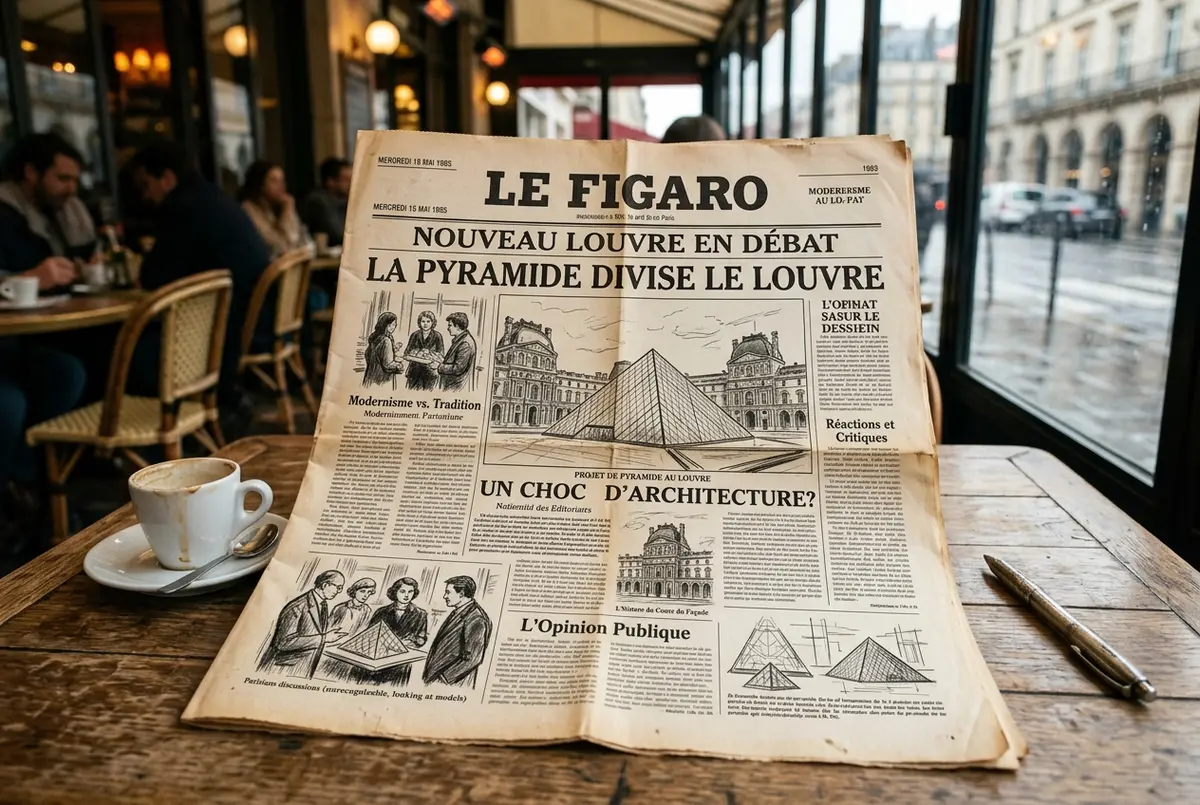
Many French critics and members of the public in the mid-1980s saw a modern glass structure dropped into the courtyard of a centuries-old royal palace as jarring at best and disrespectful at worst. Newspapers ran scathing commentary, and public opinion polls at the time reportedly showed real opposition before construction had even finished.
I’d remind anyone surprised by that reaction that bold architecture almost always draws this kind of backlash early. The controversy wasn’t a fringe complaint, it was a genuinely mainstream, national argument in France for a few years running.
How Did the Controversy Get Resolved?
It didn’t resolve through argument so much as through time: the pyramid opened to the public in 1989, visitors and Parisians alike gradually adjusted to seeing it as part of the courtyard, and within a decade or so it had become one of the most photographed landmarks in the city. The practical benefits, a genuinely better entrance and organized visitor flow, helped the structure earn its place on merit rather than just familiarity.
I’d call this one of the clearest cases I know of where public opinion on a piece of architecture simply flipped over time. Today it’s hard to find anyone who seriously argues the Louvre would be better off without it. For the longer arc of how the palace itself evolved into a museum long before Pei ever got involved, my Louvre museum history guide covers that earlier chapter.
Did Pei Design Anything Else at the Louvre?
Yes, the pyramid project included the smaller inverted Pyramide Inversee in the underground Carrousel du Louvre shopping area, along with the broader redesign of the museum’s underground entrance hall and circulation routes. The pyramid itself is the most famous piece, but the Grand Louvre project it belonged to reshaped how the entire museum handles visitor flow.
I’d encourage anyone genuinely interested in the design to see both pyramids on the same visit, since they’re a short walk apart and make a lot more sense as a pair than either does alone.
Did Pei Design Other Famous Buildings?
Yes, well beyond the Louvre. Pei’s broader career included major museum and civic commissions across multiple countries, and the Louvre project came during a period when he was already considered one of the leading architects of his generation. The Wikipedia entry on I.M. Pei has the fuller career record if you want to see how the pyramid fits into his wider body of work.
I’d point out that the Louvre commission, despite the early backlash, ended up becoming one of the defining projects of his career rather than a footnote, which says something about how the story ultimately played out.
How Did Pei Himself Respond to the Backlash?
By most accounts, Pei stayed remarkably steady through years of public criticism, trusting that the finished structure would speak for itself once visitors actually experienced it rather than just reacted to renderings and rumors ahead of completion. He reportedly kept engaging with French officials and the press through the controversy rather than retreating from the project.
I’d read that patience as its own kind of lesson for anyone judging bold design before it’s actually built. Renderings and early reactions rarely capture how a finished structure feels in person, and Pei’s pyramid is as good an example of that gap as architecture gets.
Is the Pyramid Considered a Success Today?
Overwhelmingly, yes. It’s routinely cited in architecture circles as a case study in bold modern intervention done well, and it functions exactly as intended: a clear, light-filled entrance that solved a real visitor-flow problem for one of the world’s busiest museums. The controversy that once surrounded it has largely faded into historical footnote territory.
My honest take, having read through plenty of the original criticism: most of it reads as dated now, the kind of reaction any sufficiently bold modern addition to a historic site tends to generate before people adjust to seeing it.
My Honest Recommendation
If you’re visiting the Louvre and the pyramid is just a photo stop on your way to the galleries, I’d still take thirty seconds to appreciate what a genuine gamble this design was when Mitterrand and Pei committed to it. It easily could have been a permanent embarrassment; instead it became the defining image of the museum.
For the practical side of actually using the structure, my glass pyramid guide covers its size, layout and the best times to photograph it, and my Louvre entrances guide explains which door to actually use once you’re ready to go inside.
Once you’ve got the history and the logistics sorted, my full Louvre ticket and tour lineup has every current option if you haven’t booked your visit yet.
Frequently Asked Questions
Who designed the Louvre pyramid?
I.M. Pei, a Chinese American architect, designed the pyramid as part of the Grand Louvre renovation project in the 1980s.
When was the Louvre pyramid built?
It was unveiled to the public in 1989 after several years of planning and construction.
Why was the Louvre pyramid so controversial?
Many critics initially saw a modern glass structure in a historic royal palace courtyard as architecturally disrespectful, though public opinion shifted over time.
Did I.M. Pei design anything else at the Louvre?
Yes, including the smaller inverted Pyramide Inversee and the broader underground entrance hall redesign.
Is the Louvre pyramid considered good design today?
Yes, it’s widely regarded as a successful example of bold modern architecture integrated into a historic setting.