See prices From 59 EUR · Free cancellation available
Contents
Louvre ticket scams follow a handful of repeating patterns, and once you know what they look like, they’re genuinely easy to avoid. Here’s the short version I’d want someone to tell me before my own first trip: never buy a ticket from anyone approaching you in person outside the museum, and double-check the domain of any booking site before you type in a card number.
If you’d rather skip the risk entirely and just book through a known, legitimate channel, my Louvre tickets price guide covers every real option at its real price.
Are Street Vendors Near the Louvre Selling Fake Tickets?
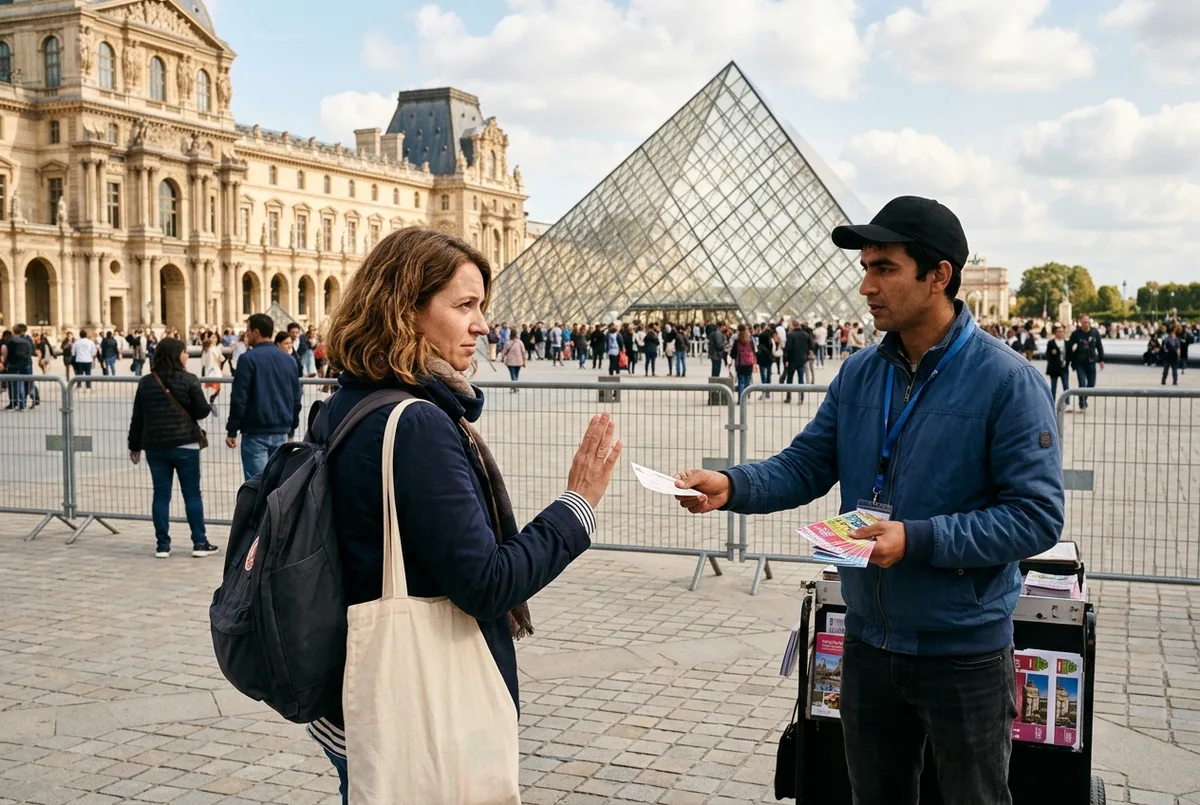
Often, yes, and this is the single most common scam pattern tied to this attraction. Someone approaches near the Pyramid or the surrounding plaza claiming to sell a skip-the-line ticket, sometimes at a discount, sometimes at a markup justified by “limited availability,” and the ticket either doesn’t work at the gate or doesn’t exist at all once you’ve paid.
I’d never buy from anyone selling tickets in person outside the museum, full stop. Legitimate operators don’t sell paper or verbal tickets on the sidewalk, and a real licensed tour meets its group at a defined point, not by flagging down passersby.
Check prices & dates
Ready to visit?
Book your tickets in advance: popular time slots sell out.
A scam site mimics the look of a legitimate ticket seller, sometimes copying real photos and even real pricing language, but routes your payment somewhere that isn’t tied to any actual museum allocation. You pay, you get a confirmation email that looks plausible, and then nothing works when you try to use it.
My honest take: the domain name is the giveaway more often than the design quality, since a convincing scam site can still look professional. I’d type the museum’s own address directly rather than click a link from an ad or a forum post, and I’d check that any third-party seller’s domain matches a name I can verify belongs to a real, operating company.
What Are the Real Warning Signs of a Scam Listing?
A price that hides until the very last checkout step, a countdown timer that resets every time you reload the page, no clear operator name attached to the listing, and payment requests outside normal card or verified payment processing, like a direct bank transfer to a personal account.
I wouldn’t give any listing the benefit of the doubt once it shows more than one of these signs together. A single oddity might be a clumsy website, but a hidden price plus a reset-on-reload countdown together is close to a guaranteed red flag in my experience looking at how legitimate sellers actually structure their checkout.
Is It Ever Safe to Buy From a Reseller Rather Than the Official Site?
Yes, as long as that reseller is a real, named, licensed operator rather than an anonymous listing. Legitimate guided tour companies and reserved-entry sellers are genuine businesses with a track record, a support contact and a clear refund policy, and buying through one of them isn’t the same risk as buying from an unverified site or a street vendor.
I’d check my Louvre official website vs third-party sellers comparison if you’re trying to tell a legitimate partner apart from the museum’s own ticketing, since both are safe routes, they just sell different products at different prices.
Why Do Scammers Specifically Target This Attraction?
Because it’s the most visited museum in the world, and that volume of demand, combined with a calendar that genuinely does sell out during peak season, creates exactly the kind of urgency scammers exploit. A traveler who’s already anxious about a sold-out date is an easier target for a street vendor’s “last available tickets” pitch.
I’d treat that urgency itself as a warning sign rather than a reason to act fast. If your dates are already sold out through legitimate channels, my Louvre tickets sold out guide covers the real fallback options, and none of them involve buying from a stranger outside the gate.
How Can You Confirm a Ticket Seller Is Legitimate Before Paying?
Search the operator’s name directly rather than just trusting the listing’s own branding, check that the website has a real support contact and clear terms, and look for the seller to show the full price and exact inclusions before you reach the payment page. A legitimate seller has nothing to hide at any step of that process.
My honest recommendation is to spend two extra minutes verifying a seller you haven’t heard of before, rather than rushing because a listing claims limited spots. In almost every case I’ve seen, a real scam relies on you moving faster than you’d normally verify something this size.
What Should You Do If You Already Bought a Fake Ticket?
Contact your card issuer to dispute the charge as soon as you realize the ticket is invalid, since most scam sellers aren’t set up to process a voluntary refund themselves. Keep the confirmation email and any screenshots of the listing as evidence for that dispute.
I wouldn’t waste much time trying to get a response from the scam site itself. Card disputes exist specifically for this situation, and they’re usually the faster, more reliable path to getting your money back than chasing the seller directly.
Are Scam Risks Different When Booking From Abroad?
A little, mostly because it’s harder to verify a seller’s reputation from outside the country and easier to feel pressured into a quick decision while you’re already deep into planning a trip. Scammers lean on that unfamiliarity, betting that a traveler booking from abroad won’t take the time to check a name against local review sources.
I’d actually slow down more, not less, when booking from outside France for exactly this reason. A quick search for the operator’s name alongside words like review or complaint takes under a minute and catches most of the sellers worth avoiding before you’ve handed over any payment details.
Do Scams Show Up on Third-Party Marketplaces Too, or Only Standalone Sites?
Both, though standalone lookalike sites tend to be the more dangerous version since they can copy an entire checkout flow convincingly. On larger marketplaces, the bigger risk is usually a misleading listing rather than outright fraud, since the platform itself typically vets sellers to some degree.
I’d still check the specific seller’s name and reviews even on a reputable marketplace, rather than assuming the platform’s own reputation guarantees every individual listing on it is accurate. It’s a smaller risk than a standalone scam site, but not a zero risk.
My Honest Recommendation
Book through a known, named operator, whether that’s the museum’s own site or a legitimate guided partner, and never buy from a street vendor or an unfamiliar link shared in a forum or ad. If a listing hides its price until the last step or pressures you with a resetting countdown, I’d close the tab and book elsewhere, even if it means paying a little more through a channel you can actually verify.
For a safe starting point, my louvre museum tickets homepage lines up legitimate options at their real prices, and my how to buy Louvre tickets online guide walks through exactly what a genuine booking flow should look like. If you’re comparing named third-party platforms specifically, my best place to book Louvre tours guide is worth reading, and the museum’s own current rules are published on the official Louvre site if you want to confirm anything a third-party listing claims.
Frequently Asked Questions
Are street vendors near the Louvre selling real tickets?
Rarely. Most tickets sold by someone approaching you in person outside the museum are fake, overpriced, or simply don’t work at the entrance.
How do I know if a Louvre ticket website is legitimate?
Check for a clear operator name, a full price shown before payment, and verifiable contact details. Avoid any site that hides the price until the final checkout step.
What’s the biggest red flag for a Louvre ticket scam?
A resetting countdown timer combined with no visible operator name is close to a guaranteed sign to leave the site and book elsewhere.
Is buying from a third-party reseller always risky?
No. A legitimate, named guided tour operator or reserved-entry seller is a safe route. The risk sits with anonymous listings and street vendors, not with all resellers.
What should I do if I already paid for a fake Louvre ticket?
Dispute the charge with your card issuer right away and keep your confirmation email and listing screenshots as evidence, since the scam seller itself is unlikely to issue a refund.