Louvre museum disabled tickets are more generous than most visitors expect: the museum offers free or reduced entry for visitors with disabilities, and in most cases a companion gets in free too. Here’s the part I’d flag early, since it’s easy to miss: the step-free route into the building isn’t through the main Pyramid doors most people queue at, it’s a separate, less crowded path worth knowing about before you arrive.
If you’re still working out ticket prices for the rest of your group, my Louvre tickets price guide covers every standard, guided and reduced-rate option side by side.
Who Qualifies for Free or Reduced Disabled Entry?
Visitors with a recognized disability, shown through a disability card or official documentation, typically qualify for free or reduced admission, and in most cases one accompanying companion enters free alongside them. The exact proof accepted can vary by country of issue, so it’s worth checking the museum’s current policy for your specific documentation before you travel.
I’d carry the physical card rather than a photo of it on your phone if you have the choice, since a staff member checking a worn plastic card at a glance tends to move faster than squinting at a phone screen in a busy entrance hall. It’s a small thing, but it matters when you’re already managing mobility logistics. The museum publishes its current entry rules, including accepted documentation, on the official Louvre visiting rules page, and I’d check it close to your travel date rather than rely on an older summary.
Does the Companion Discount Cover More Than One Person?
Usually just one companion, not an entire travel group. If you’re visiting with a larger party, expect the disabled visitor and one named companion to get the free or reduced rate, while anyone beyond that pays the standard admission price.
My honest take: I’d confirm this ratio before you build out a bigger group’s budget around it, since assuming the whole party qualifies is the most common mistake I see in this exact situation. It’s a generous policy, just not an unlimited one.
Which Entrance Should You Actually Use?
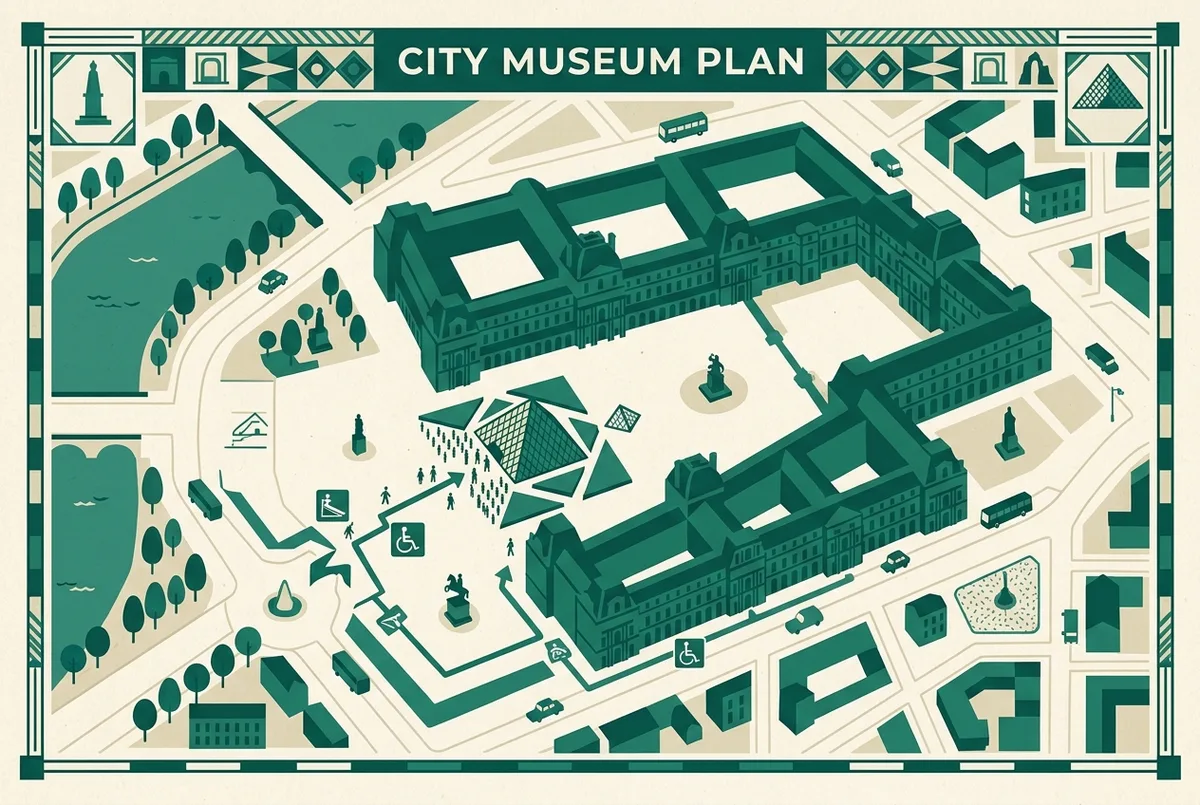
Not the main Pyramid doors, if you can avoid them. The Louvre has a step-free, more direct entrance route built for visitors with mobility needs, and it tends to bypass a meaningful chunk of the general queue that builds up at the primary doors during busy hours.
I’d use this route even if the main entrance looks manageable that day, simply because it’s designed around fewer stairs, fewer crowd pinch points, and a shorter walk once you’re inside to the elevators that reach the upper floors. My Louvre entrances guide covers every entry point in more detail, including the quieter underground option most visitors never think to check.
Is the Museum Itself Wheelchair Accessible Once Inside?
Largely, yes. The Louvre has invested in elevators, ramps and accessible routes connecting its main wings, though a handful of smaller galleries in older sections of the building can still present tighter turns or the occasional step that a fully flat path doesn’t quite solve.
I wouldn’t expect a perfectly flat museum given how old parts of the building actually are, but I would expect the headline galleries, the ones holding the Mona Lisa, the Venus de Milo and the Winged Victory, to be comfortably reachable on the accessible routes. If a specific gallery matters to you, it’s worth checking accessibility details for that exact room ahead of time rather than assuming the whole building is uniform.
Does This Exemption Apply to Guided Tours as Well?
The free or reduced admission typically applies to the standard entry portion, similar to how the under-26 exemption works. A guided tour layered on top still usually charges for the guide’s time and the reserved slot, even when the base admission itself would be free or reduced for a qualifying visitor.
I’d call ahead or check with the specific tour operator if you’re booking a guided experience and want to understand exactly how the disabled-entry rate interacts with that product’s pricing, since policies can differ slightly between the museum’s own ticketing and a third-party guided tour.
What Should You Bring to Avoid Delays at the Gate?
Your disability documentation, ID for both yourself and your companion, and a little buffer time built into your arrival. Even with a dedicated entrance, there’s usually a short check at the door to confirm the documentation before you’re waved through.
My honest recommendation is to arrive a bit earlier than you normally would for a standard visit, not because the process is slow, but because having that extra margin removes any stress if the staff need a moment longer to verify your card. I’d rather have ten spare minutes than feel rushed through a conversation about documentation.
Are Wheelchairs or Mobility Aids Available to Borrow?
Many major museums, the Louvre included, keep a limited number of wheelchairs available on-site for visitors who need one but didn’t bring their own, though availability isn’t guaranteed and tends to work on a first-come basis. If you rely on a specific mobility aid, I’d bring your own rather than count on an on-site loan being free when you arrive.
I’d treat any borrowed equipment as a backup plan rather than the primary one, especially during peak season when demand for a limited pool of loaner equipment is highest. Checking current availability directly with the museum ahead of a specific travel date removes the guesswork.
Is a Guided Tour Easier Than Going Self-Guided?
For some visitors with disabilities, yes, mainly because a guide can pace the route around your specific needs rather than leaving you to work out the most efficient accessible path through a very large building on your own. A guide who already knows the step-free route and the elevator locations saves real time and real effort compared to figuring it out room by room.
I’d weigh this the same way I’d weigh it for any visitor deciding between guided and self-guided: if navigating independently feels manageable and you’d rather move at your own pace, the self-guided reserved-entry route works fine. If you’d rather have someone else handle the logistics of getting from gallery to gallery, I’d lean toward a guided option instead, since that removes one more variable from a day that already involves enough planning.
Does Booking in Advance Matter More for Accessible Entry?
A little, yes, though not because accessible slots are scarcer than standard ones. Booking ahead simply gives you time to confirm the specific documentation accepted, check which entrance is currently in use for accessible access, and arrange transport that drops you close to that entrance rather than the main plaza.
I’d book at least a few days ahead specifically to leave room for any questions about documentation to get answered before travel day, rather than discovering a gap in what you brought right at the gate. A quick email or call to confirm current requirements removes most of the uncertainty here.
My Honest Recommendation
If you or someone in your group qualifies for disabled entry, I’d claim it. It’s a real, well-structured policy covering both the visitor and one companion, and the step-free entrance route alone is worth knowing about even before you factor in the price. I’d use that dedicated entrance over the main Pyramid doors on any day the museum looks busy, which in practice is most days.
Bring solid documentation, build in a little extra arrival time, and don’t assume the whole building is flat just because the entrance is. For everything else around pricing and booking, my louvre museum tickets homepage lines up every ticket format, and readers checking a different exemption should see my Louvre tickets for students and under-26s guide, which works on a separate set of rules from this one. If you’re deciding between the official site and a guided partner regardless of your entry rate, my Louvre official website vs third-party sellers comparison and my Louvre ticket cancellation and refund policy guide are both worth a look before you book, and if your preferred dates turn out to be unavailable, my Louvre tickets sold out guide has the real next steps.
Frequently Asked Questions
Do visitors with disabilities get free entry to the Louvre?
Many qualify for free or reduced admission with proper documentation, and in most cases one accompanying companion enters at the same reduced or free rate.
Is there a separate entrance for visitors with mobility needs?
Yes. The Louvre has a step-free route distinct from the main Pyramid doors, which also tends to see a shorter wait than the primary entrance during busy periods.
Can more than one companion enter free with a disabled visitor?
Usually only one named companion qualifies for the free or reduced rate. Additional members of a larger group typically pay standard admission.
Is the whole museum wheelchair accessible once inside?
Most major galleries are, through elevators and ramps connecting the main wings, though a few smaller rooms in older sections can still have tighter or less level access.
What documentation should I bring to claim disabled entry?
A recognized disability card or official documentation for the visitor, plus ID for both the visitor and the accompanying companion.